


Please use this identifier to cite or link to this item:
http://113.161.190.196:8080/thuvienso/handle/123456789/1009Full metadata record
| DC Field | Value | Language |
|---|---|---|
| dc.contributor.author | Wilson, Robin Fretwell | vi |
| dc.date.accessioned | 2015-02-04T03:39:57Z | - |
| dc.date.available | 2015-02-04T03:39:57Z | - |
| dc.date.issued | 2006 | vi |
| dc.identifier.isbn | 978-0-511-22519-2 | vi |
| dc.identifier.uri | http://10.0.16.20:8080/dspace/handle/DLU123456789/35491 | vi |
| dc.identifier.uri | http://192.168.1.40:8080/thuvienso/handle/123456789/1009 | - |
| dc.description.abstract | The family has undergone almost revolutionary reconfigurations over the past generation. In the space of a few decades, we have seen the universal recognition in the United States of no-fault divorce, the legal recognition of nonmarital fathers, the establishment of registration schemes and other claims between cohabitants, both heterosexual and homosexual, and the recognition as parents of adults who have neither a biological tie to a child nor an adoptive one.1 Recently, the pace of these changes has become almost frenetic. Just this year, Canada legalized same-sex marriage through national legislation, as South Africa did by judicial opinion | vi |
| dc.language.iso | en | vi |
| dc.publisher | Cambridge University Press | vi |
| dc.subject | Principles | vi |
| dc.subject | Dissolution | vi |
| dc.title | Reconceiving the Family : Critique on the American Law Institute’s Principles of the Law of Family Dissolution | vi |
| dc.type | Book | vi |
| Appears in Collections: | Sách, Giáo trình điện tử - Tiếng Anh | |
Files in This Item:
| File | Description | Size | Format | |
|---|---|---|---|---|
| 0521861195.pdf | 5.31 MB | Adobe PDF | 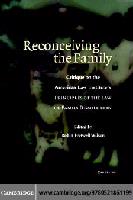 Download |
Items in DSpace are protected by copyright, with all rights reserved, unless otherwise indicated.